 Click
for Site Directory
Click
for Site DirectoryBe patient there is a lot to download on this page!!
75282 Squadron Leader Robert Wallis Beresford Updated August 2017
"D" Flight,974 Squadron and 978 Squadron "B" Flight
Born 11 May 1906 - Died 2000
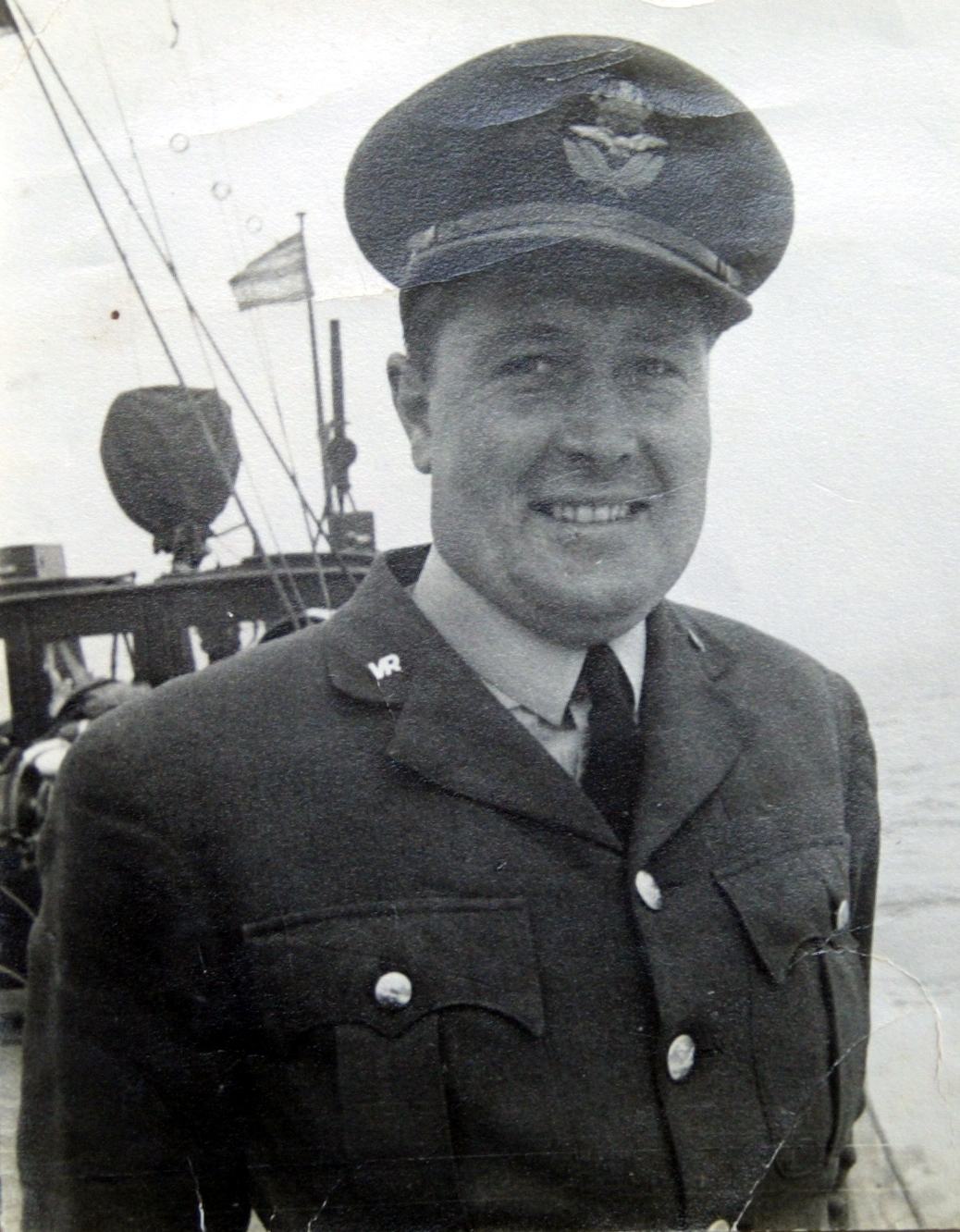
On board a balloon ship at Burma
Robert Wallis Beresford was born on the 11th May 1906 at The Knowle, Arkley, Barnet, Herefordshire. His father was Howard Marshal Beresford an Insurance Accountant at the North British and Mercantile Insurance Company and his mother was Emily Beresford (Formerly Stevens). He had a brother C H Beresford and one sister Joan Beresford.
Beresfords' father had a long record of public service. He had been president of Arkley Golf Club since its formation in 1909, it still exists today, becoming an honorary life member in April 1938.He was involved in forming the Arkley Villagers Golf Club in 1922.He had been a sidesman and churchwarden of the local church St Peters. He was involved with the Arkley entertainment society and Arkley Girls Club. For some years he was manager of Barnet Grouped Schools encompassing Arkley Infants School. He had also sat as a trustee on the Elizabeth Allen Trust as well as the Garret's Almhouse Charity and Barnet Chancel Estate. I get the impression that having been brought up in such a public service household where service was seen as a duty, Squadron leader Beresford absorbed many of the qualities needed to manage men in times of war. His father died in 1946 and his mother sadly died nine days later, Beresford having to fly in from India for the funeral.
I have had some difficulty researching his history but have decided to include what I know on this website so far.
I have acquired a large number of documents about his work with the Barrage Balloon Squadrons and his life in civvy street afterwards
Career Highlights
S/L Beresford joined the RAF pre-war and it is clear that the men under his command thought a great deal of him.
He was clearly an intelligent man and undertook considerable research into barrage balloons and their use in wartime and was based at Cardington Bedfordshire with the Experimental Balloon Section. His RAF pass describes him as six feet tall with dark hair and hazel coloured eyes.
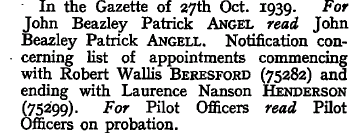
He became a pilot officer on the 5th October 1939 (Gazetted 27 October 1939 Issue 34718)
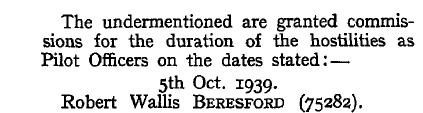
The following errata was published on the 14th November 1939
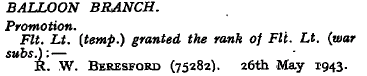
The London Gazette shows he was promoted to (temp) Flt. Lt 26th May 1943 (war subs.)
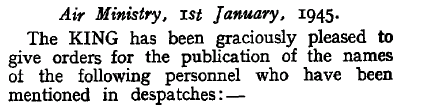
In January 1945 the King ordered he be mentioned in despatches



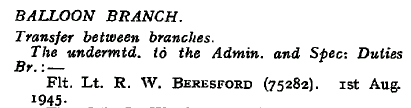
In October 1945

These were his medals at the end of the war.
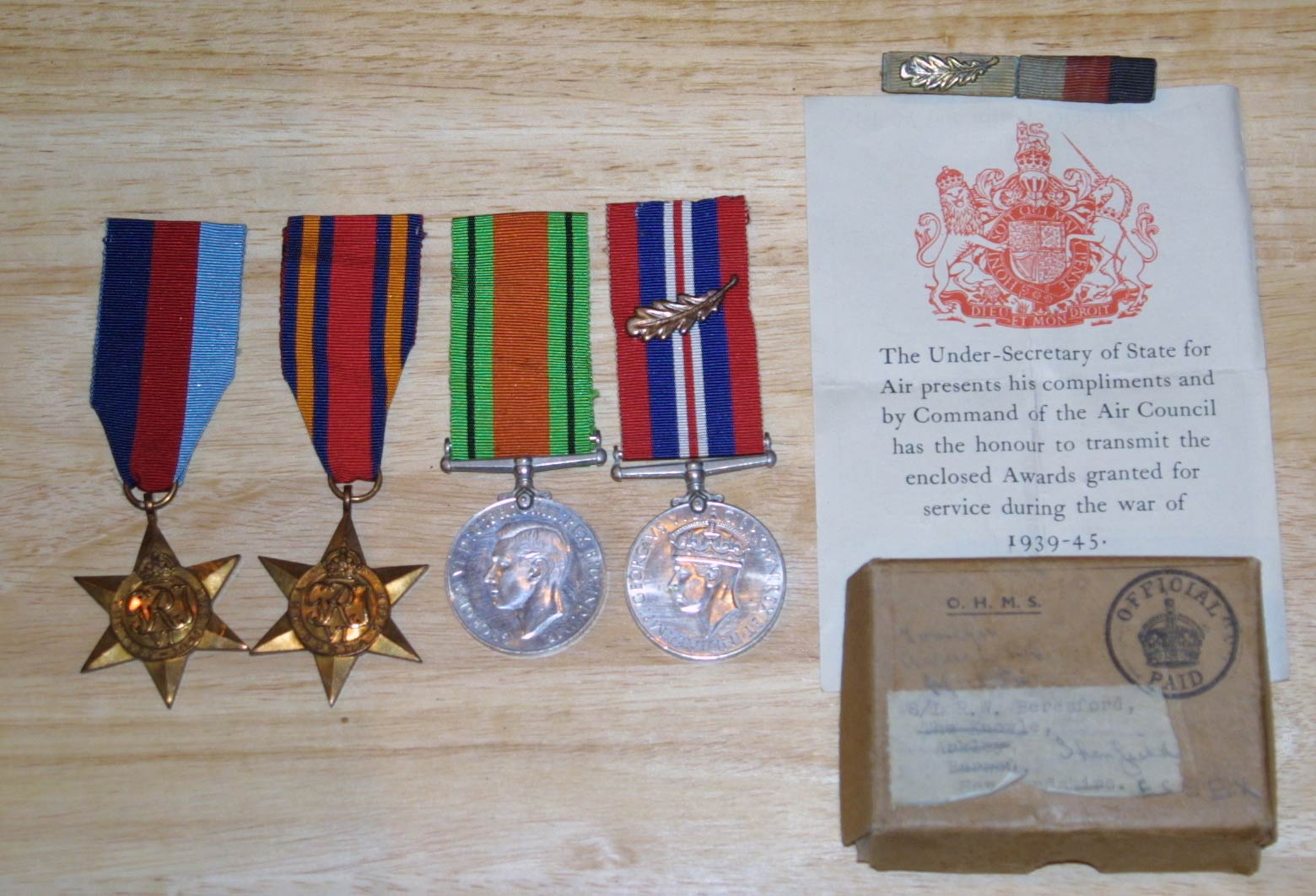
As you can see from his medals and the transcript from the London Gazette of January 1945 above he was Mentioned in Despatches for his work in the second world war. By the end of the war he had become a Squadron Leader
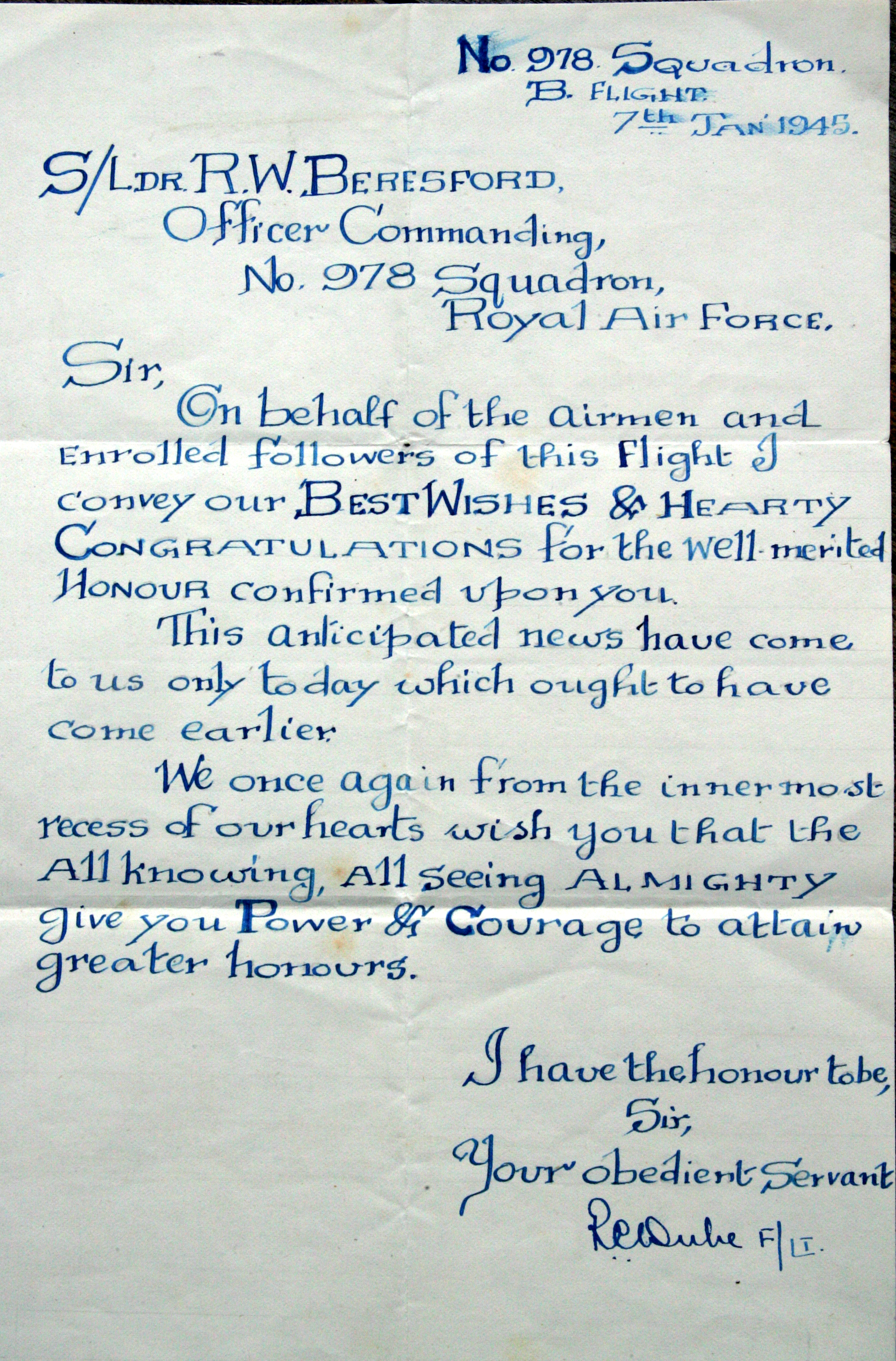
Here is a letter from his men who were with him in 1944/45 when he was in charge of 978 Squadron, they obviously were proud of him and thought a great deal of him as a man.
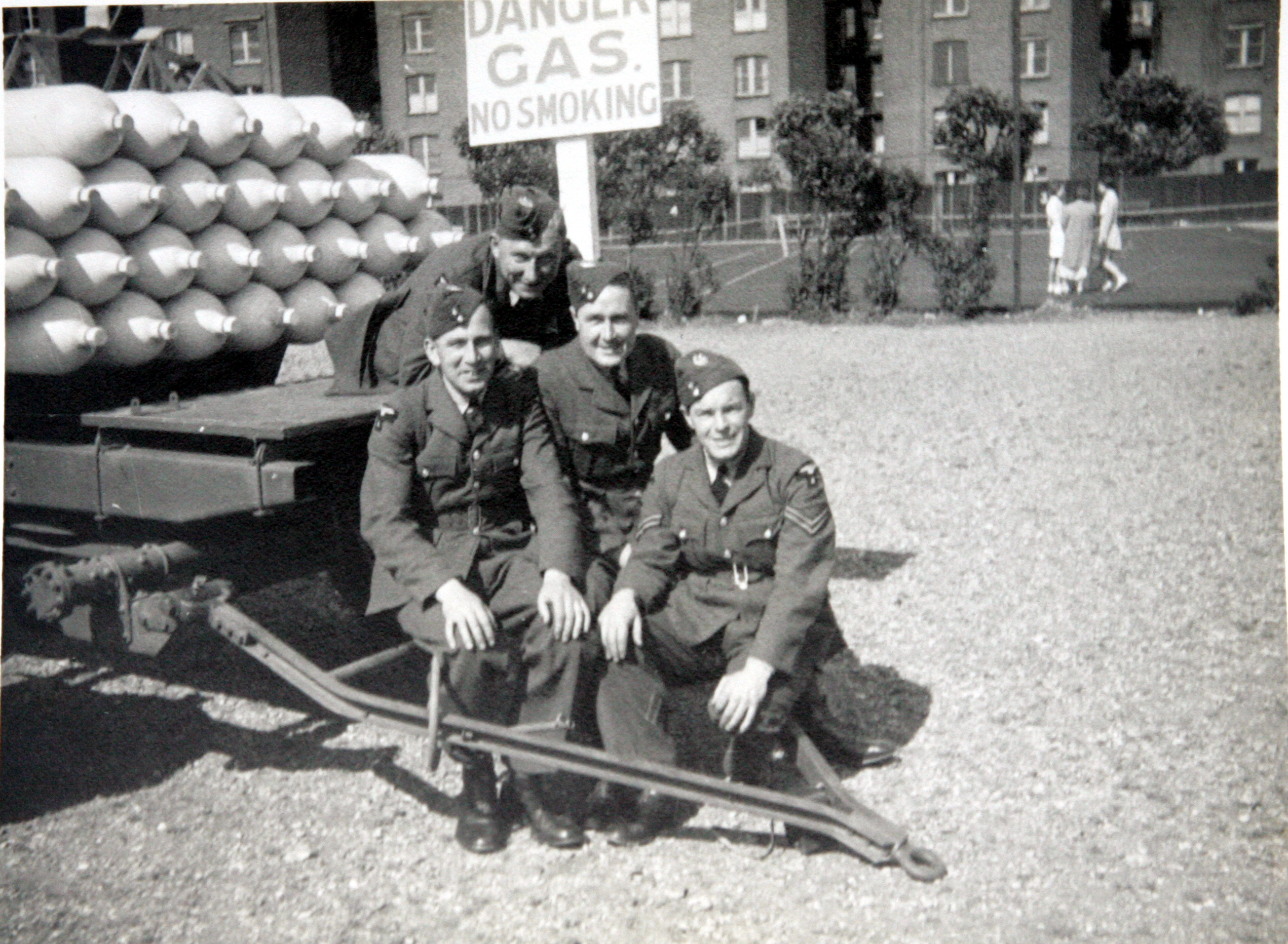
The picture above is obviously taken in England and shows a balloon crew with Beresford and the typical hydrogen gas trailer of the day with its load of 30 cylinders, note the warning notice about smoking!!
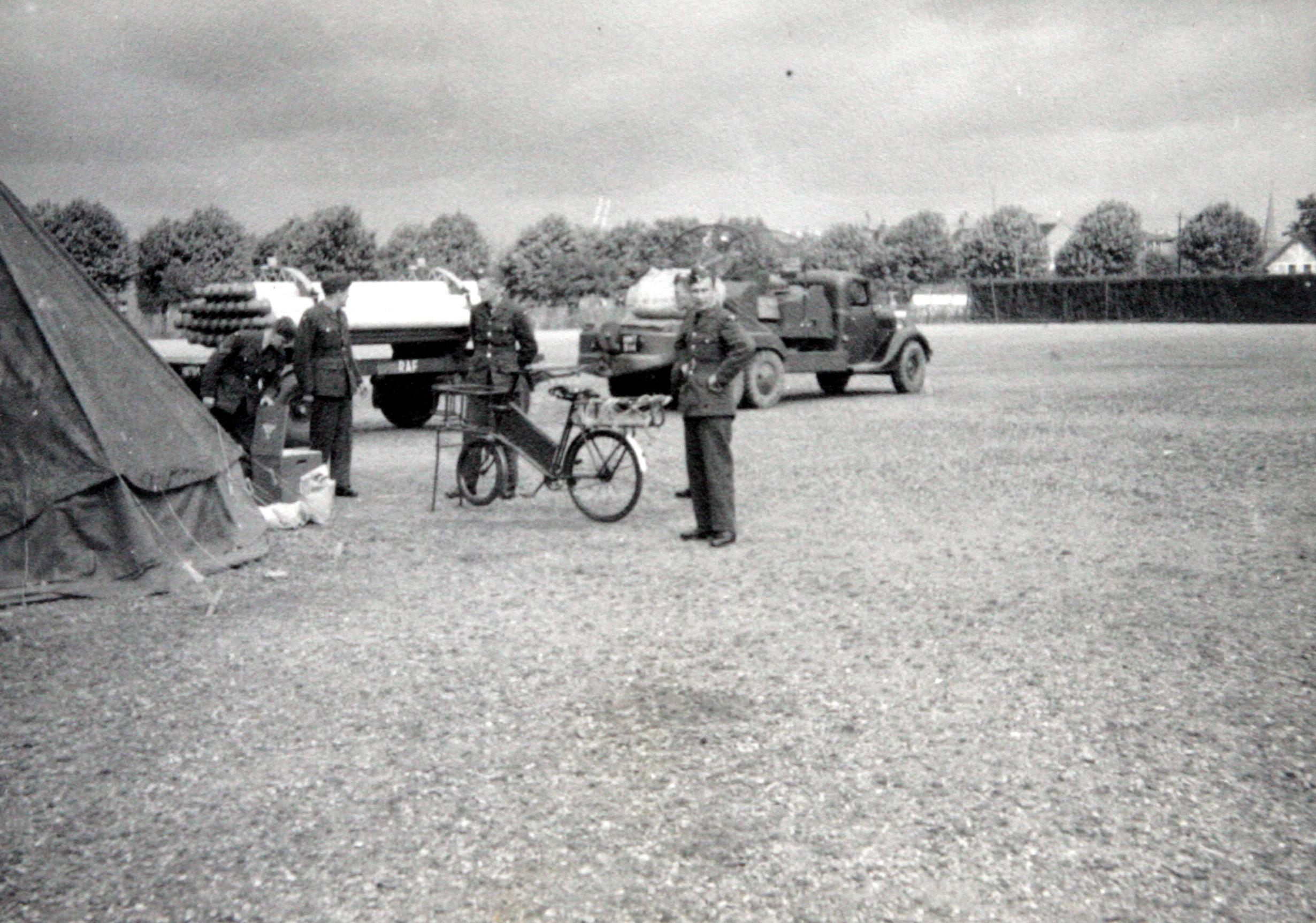
Here they are again with a tent, the proverbial butchers bicycle with front and rear panniers and a typical Fordson Sussex six wheeler winch lorry with hydrogen trailer. I think the man on the left is inspecting a "hay box" with hot food in it.
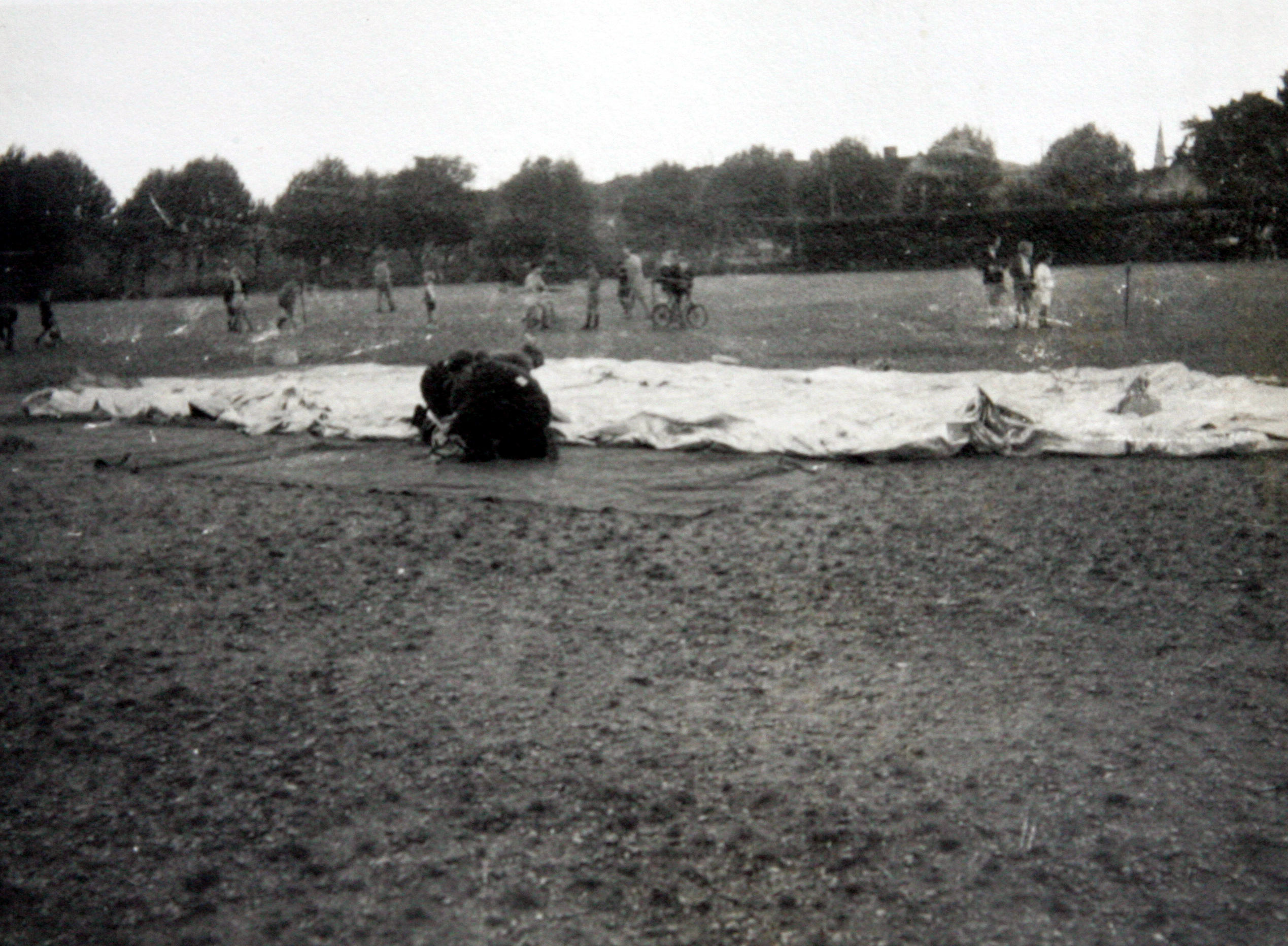
Here are a balloon crew getting ready to inflate a MKVI balloon, you can see the intense interest that this has caused amongst the children and adults in the background
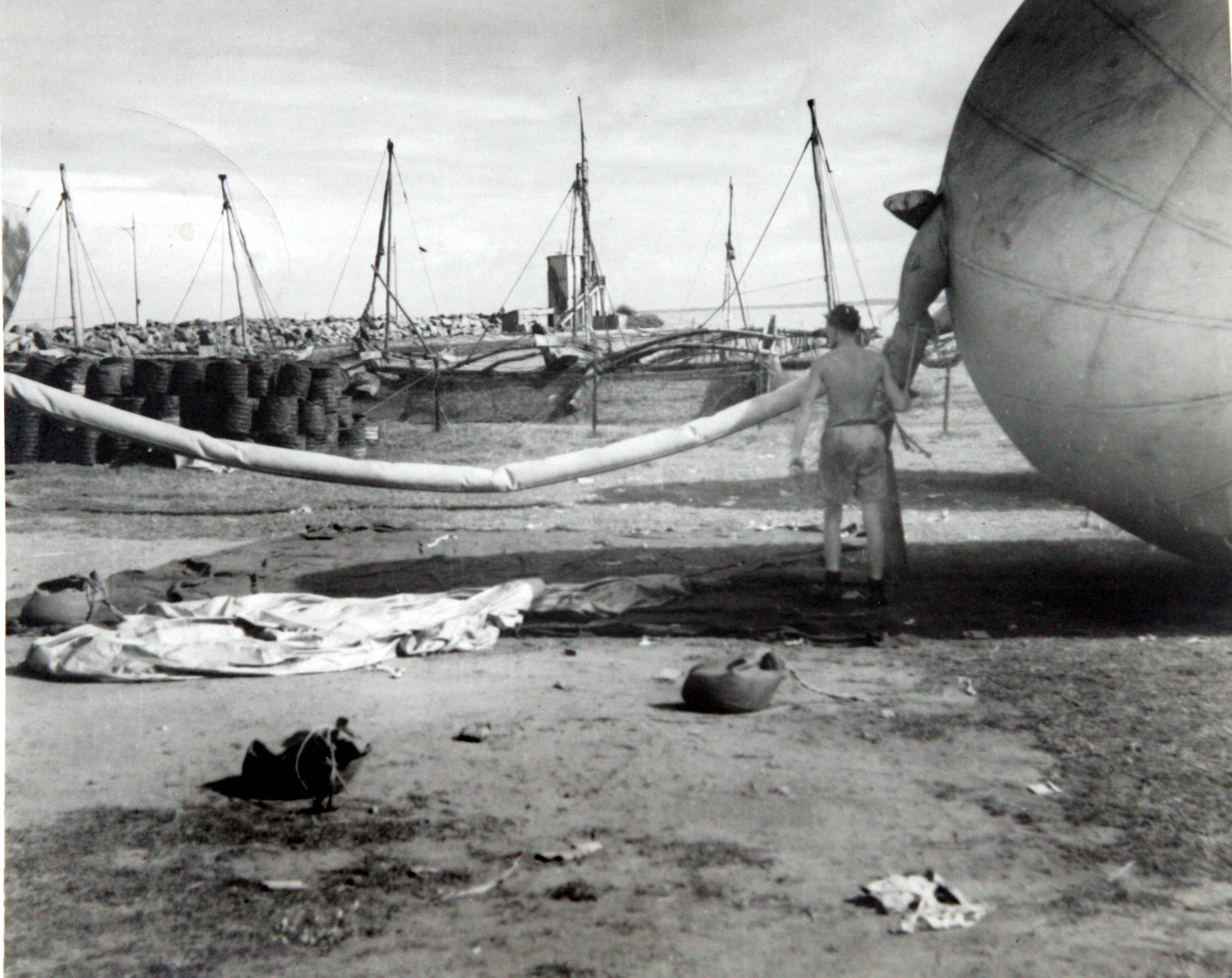
This picture seems to show a balloon being inflated but I am unsure as to what type of balloon (Low Zone Mk IV?) this is and where it took place (I suspect India)
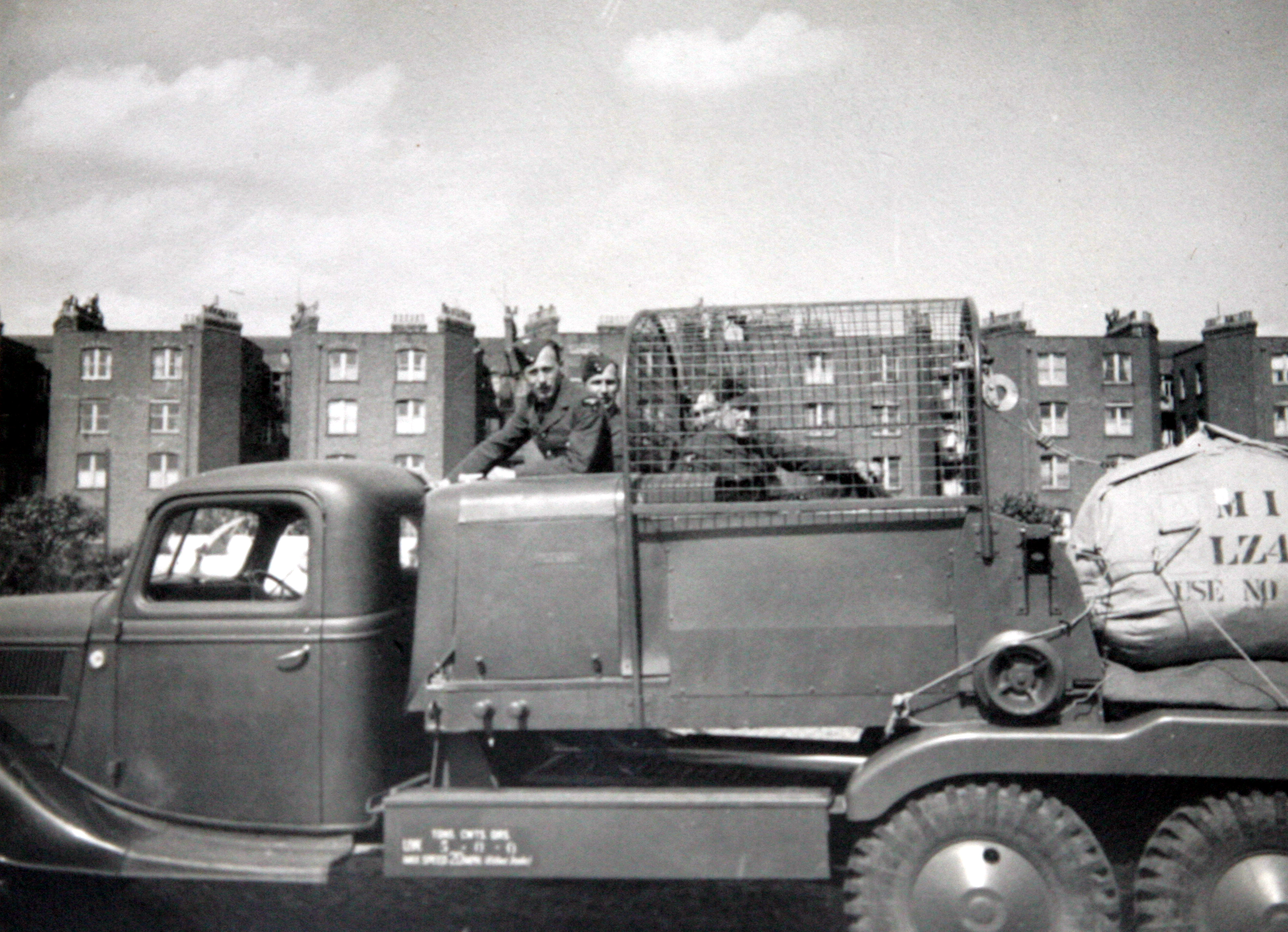
Here is Beresford inside the cage of the six wheel Fordson Sussex Balloon Winch vehicle, note the barrage balloon packed on the back, this appears to be a Low Zone Mk IV balloon, this picture is obviously in Britain during WWII.
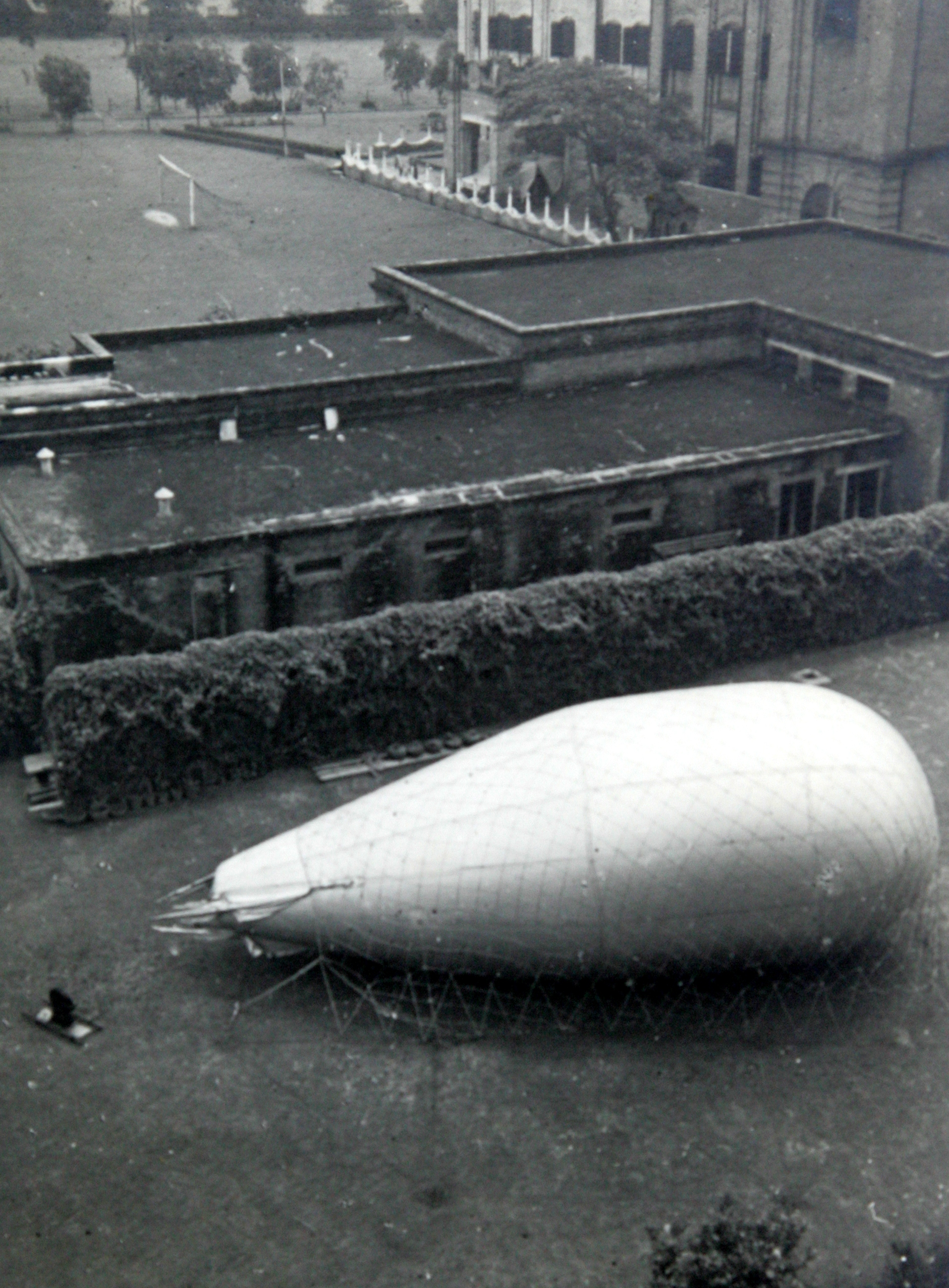
Here is a typical balloon bed with the balloon (Low Zone Mk IV?) placed in a sheltered spot and the building behind acting as a natural windbreak. The balloon is securely picketed down and as an extra precaution a large net is thrown over the whole and similarly picketed down. I think this was taken in India as well, simply because this type of balloon was used in hot climates due to the rapid expansion of the gas with the heat.
He saw service in India and Burma and was asked to determine if Mark VI balloons or indeed spherical balloons could be flown to protect vital targets at Singapore. In documents I have that are marked "Top Secret", Beresford makes a strong argument against using balloons at Singapore due to the climate and in particular the strong likelihood of lightening strikes on the balloons/.
Barrage Balloon equipment was sent by sea to Singapore but was lost when SS Bangalore was sunk on the 21 July 1941 after colliding with the Richmond Castle. The Bangalore had to be sunk by gunfire from an escort ship to prevent her becoming a hazard to shipping.
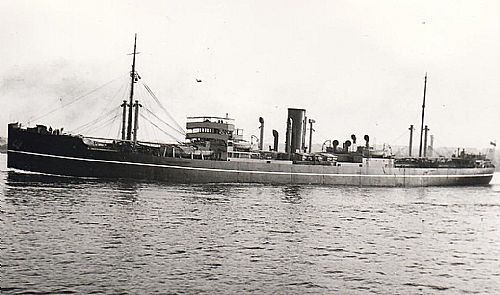
SS Bangalore- Photo supplied by Joe McMillan Collection
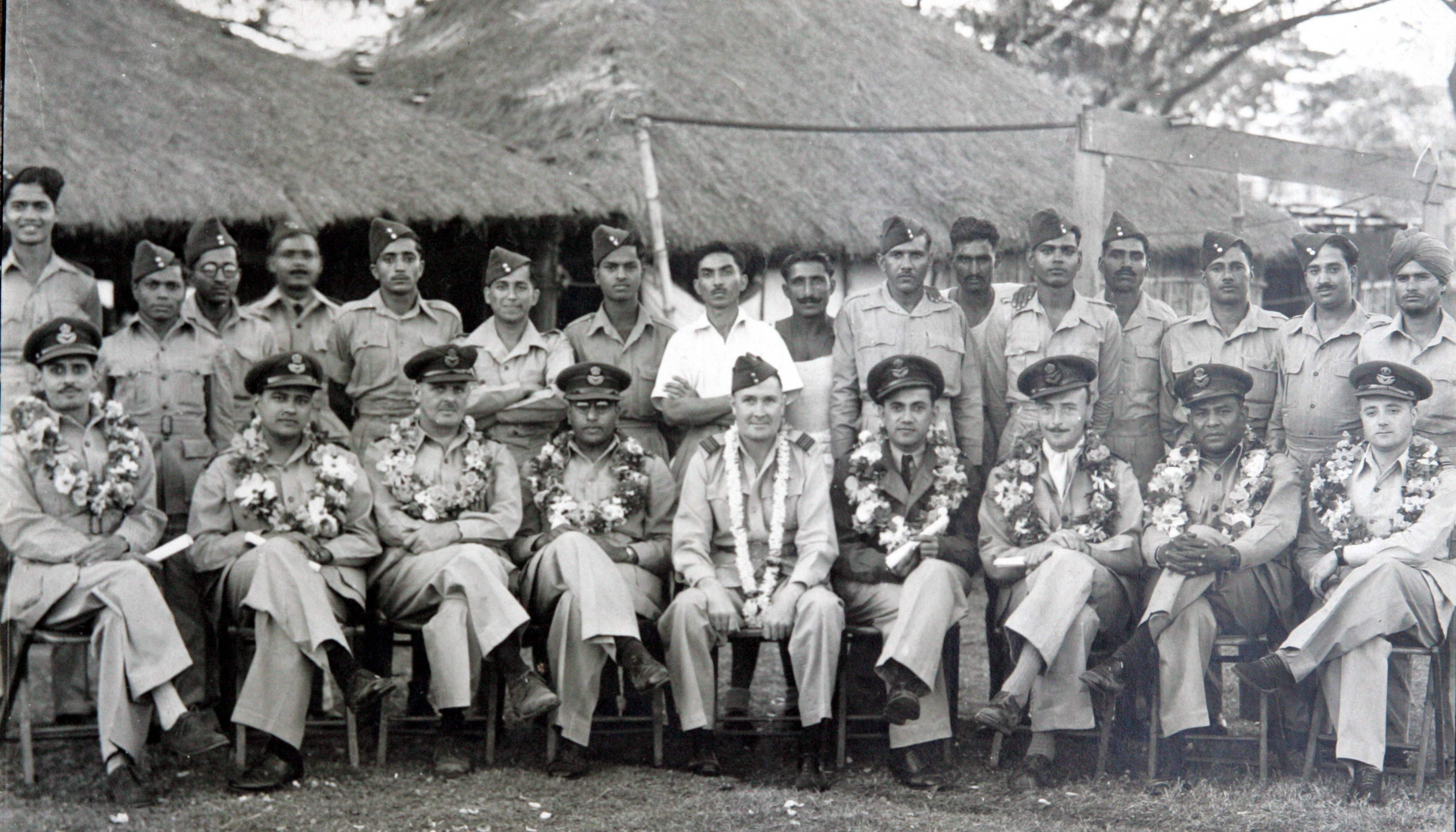
Here he is pictured above with some Indian RAF types - date unknown (1943?)
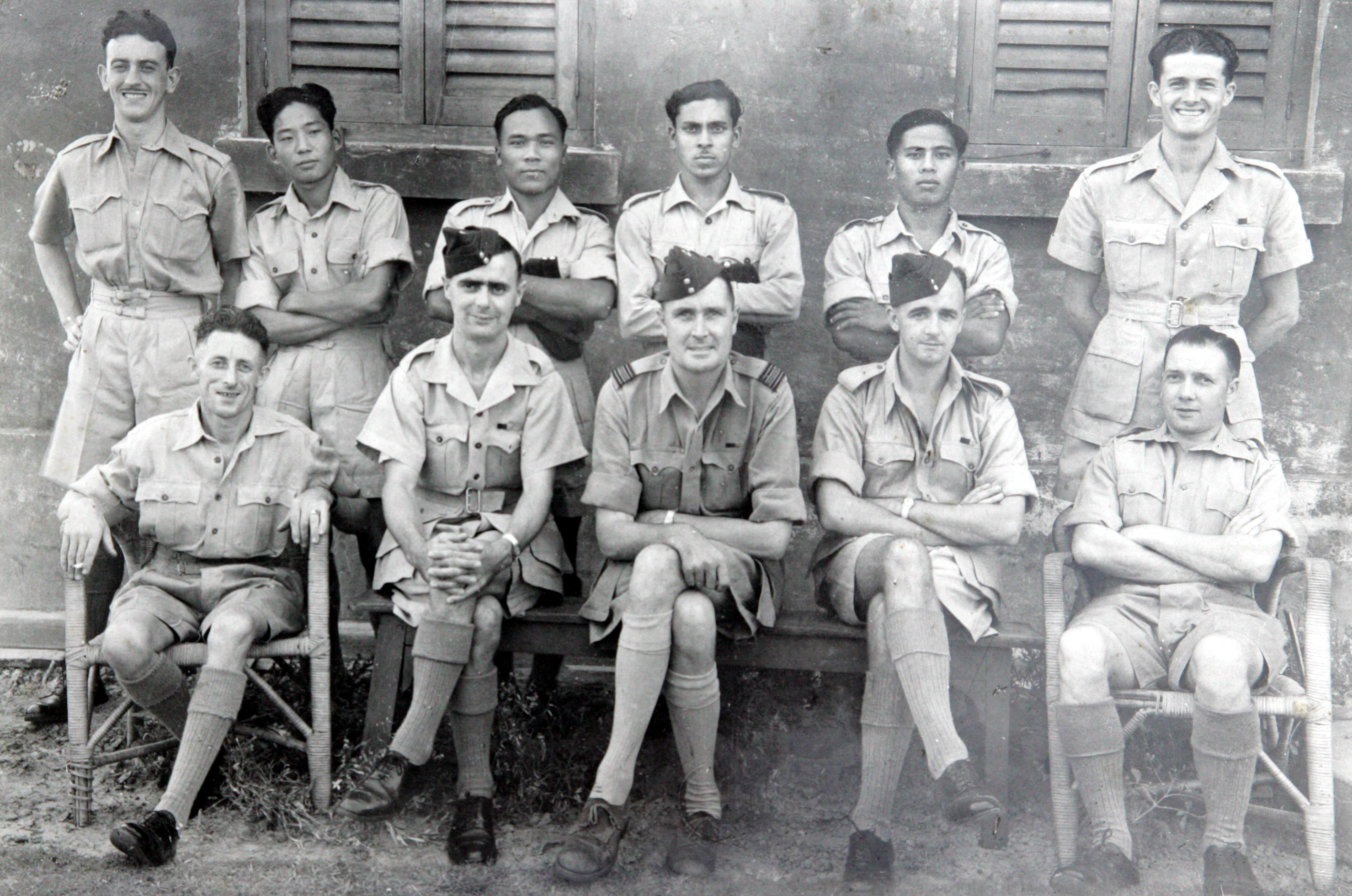
Here he is with 978 squadron members in India -date unknown (1943?)
I am indebited to Subhadip Mukherjee, www.subhadip.in, Blog: www.indianvagabond.com who has supplied me with pictures taken in
August 2017 of the original balloon headquarters.
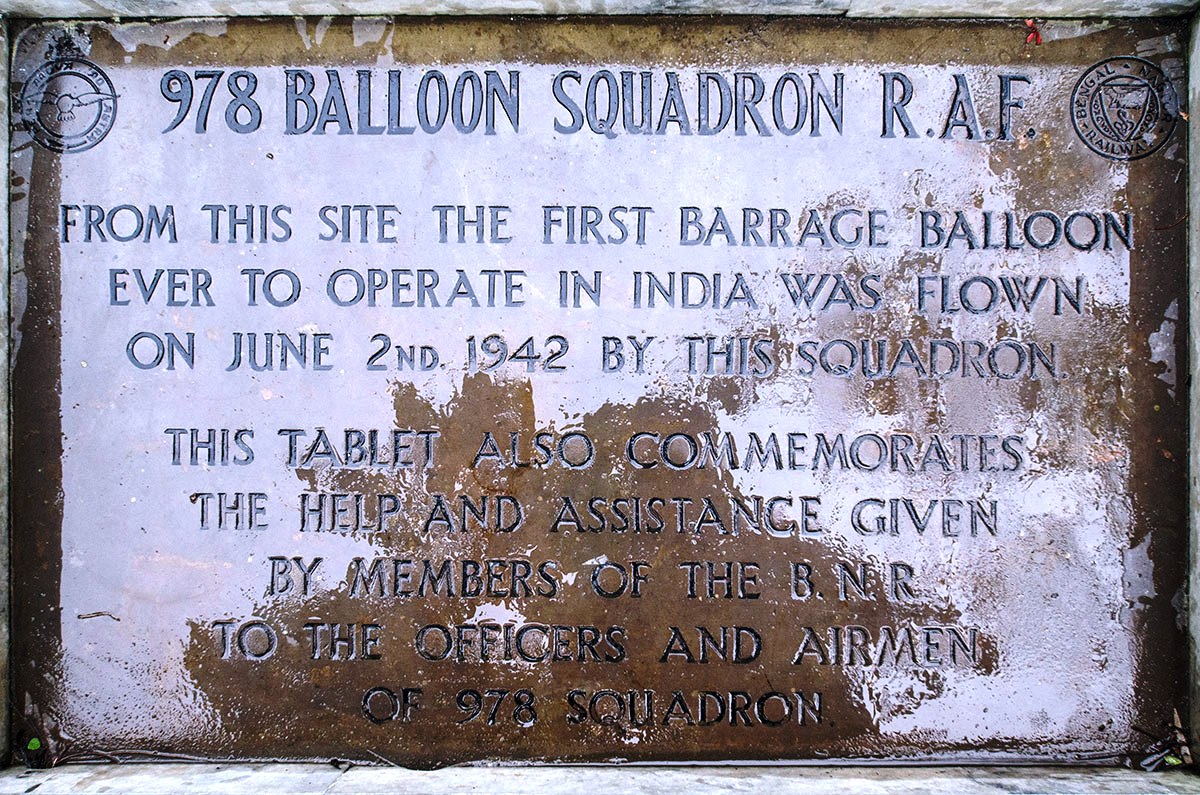
The plaque freshly washed: Picture Credit: Subhadip Mukherjee
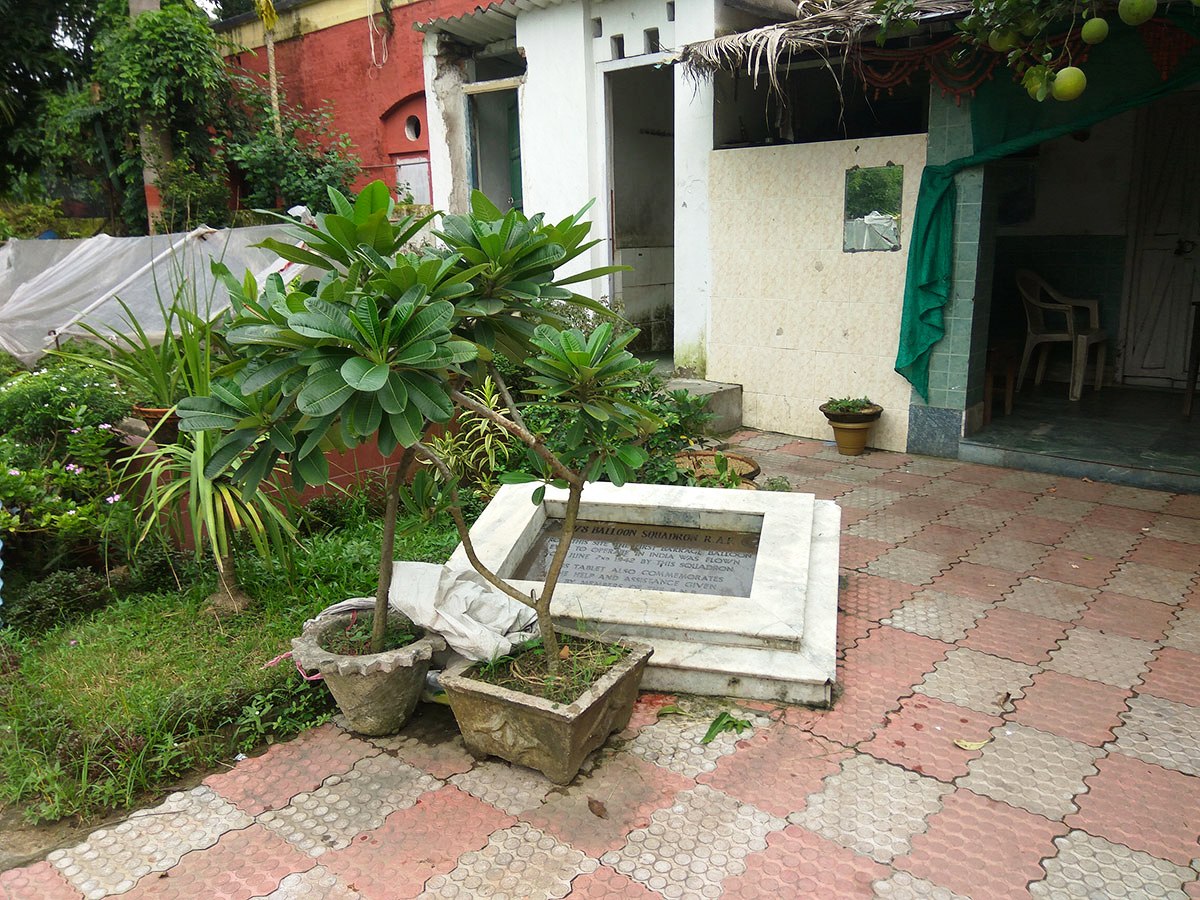
The site of 978 Barrage Balloon Squadron Picture Credit: Subhadip Mukherjee
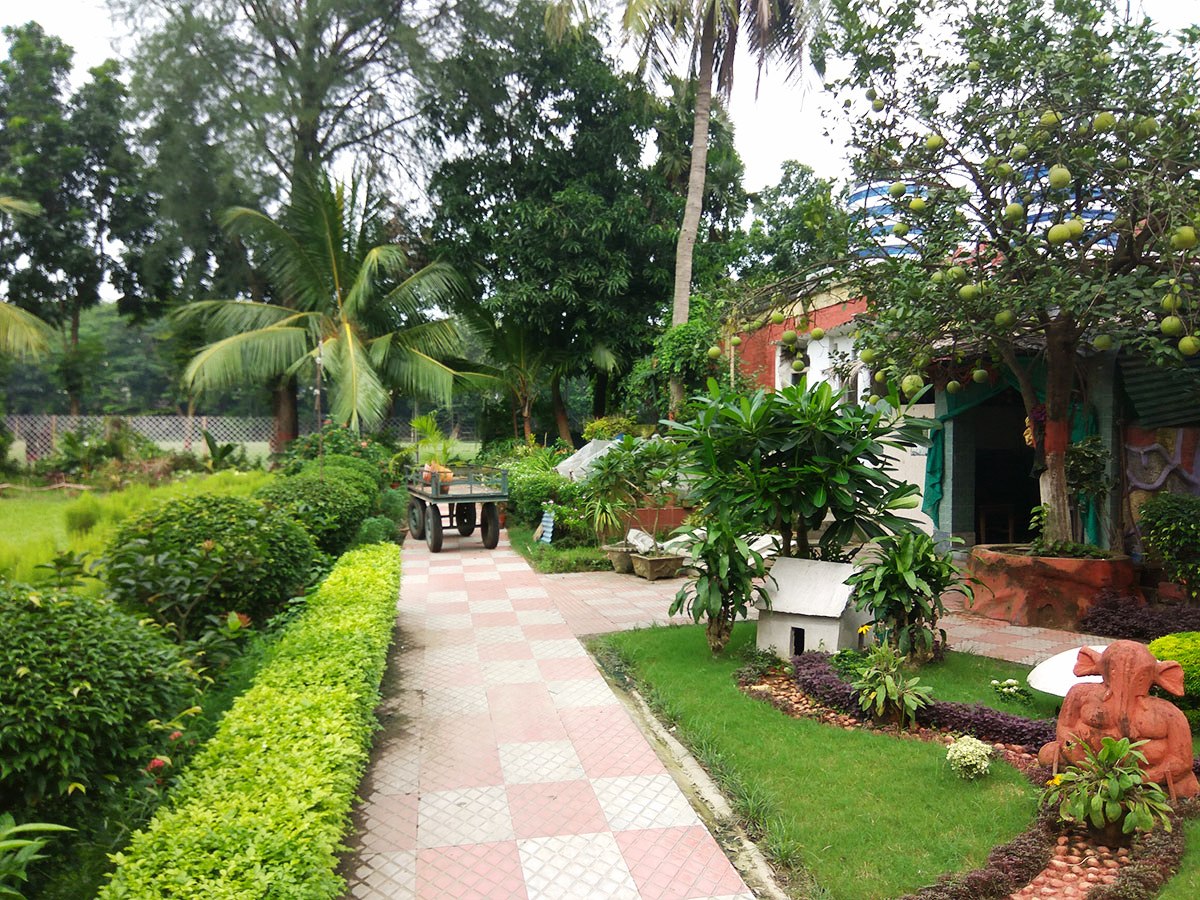
Casualties for 978 Squadron
Deaths and injuries were relatively light during the stay of the Squadron.
1.
107296
Pilot Officer LEAVER, GEORGE JAMES EDWARD
Date
of Death: 29/05/1942, Age: 30, Regiment/Service: Royal Air Force Volunteer Reserve 978 Barrage Balloon Squadron
Grave Reference: Plot O. Row F. Grave 28.
Cemetery: CALCUTTA
(BHOWANIPORE) CEMETERY, KOLKATA
Additional Information: Son
of Edward Robert and Nellie Leaver; husband of Vera Emily Leaver, of Colchester,
He died at 05.00 hours from appendicitis in the British Military Hospital, Calcutta. The Garrison Chaplain, Rev. C. J. Alchin, officiated at the funeral.
He
was buried with full Service honours at 1730 hours at the Military Cemetery,
Brawnipore Road, Calcutta.
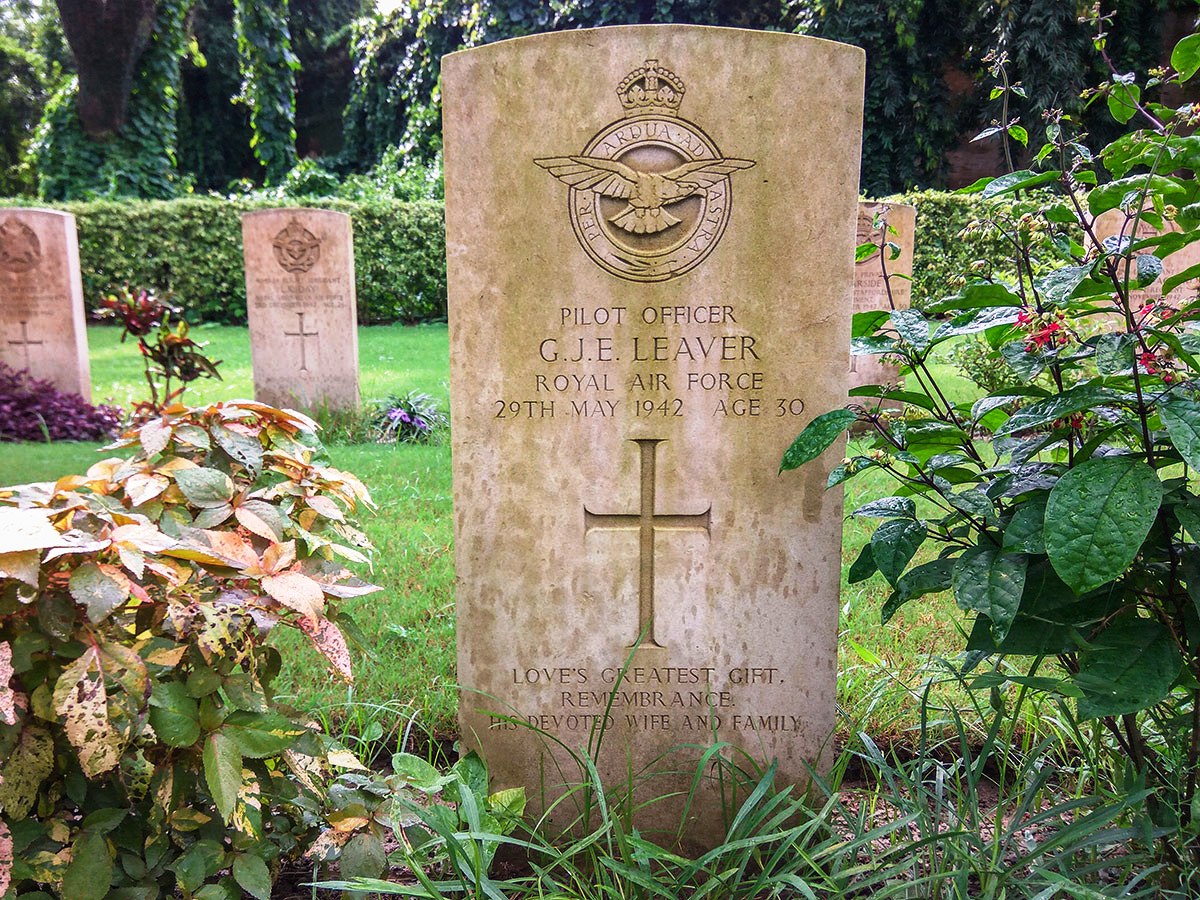
I am indebited to Subhadip Mukherjee, www.subhadip.in, Blog: www.indianvagabond.com who has supplied me with with this picture.
619686
Leading Aircraftman
CARRUTHERS, RICHARD
Date
of Death: 24/01/1943, Age: 26, Regiment/Service: Royal Air
Force, 978 Barrage
Balloon Squadron
Grave
Reference: 6. H. 11., Cemetery: CHITTAGONG
WAR CEMETERY
Additional
Information: Son of Ben and Annie Carruthers, of Upperbey,
There was an air raid on 23 JAN 1943 at 1207 hours at Chittagong. 14 enemy bombers approached the Dock area from the East
and turned South-west at 15,000 feet. At 1212 hours a number of high explosive and incendiary bombs were dropped causing
considerable damage
and fires. An ammunition barge caught fire. Anti-aircraft guns went into action. Two balloons broke away but were recovered.
The Flight inflation shed was wrecked and 13 balloon inside were destroyed. Other R.A.F. buildings were hit and some R.A.F.
equipment was lost and damaged.
A number of airmen were casualties: 619686 Leading Aircraftman CARRUTHERS, RICHARD received a head wound and was hospitalised
as seriously injured. He died at No. 68, Chittagong General Hospital on the 24 JAN 1943 and was buried the same day at Chittagong War Cemetery.
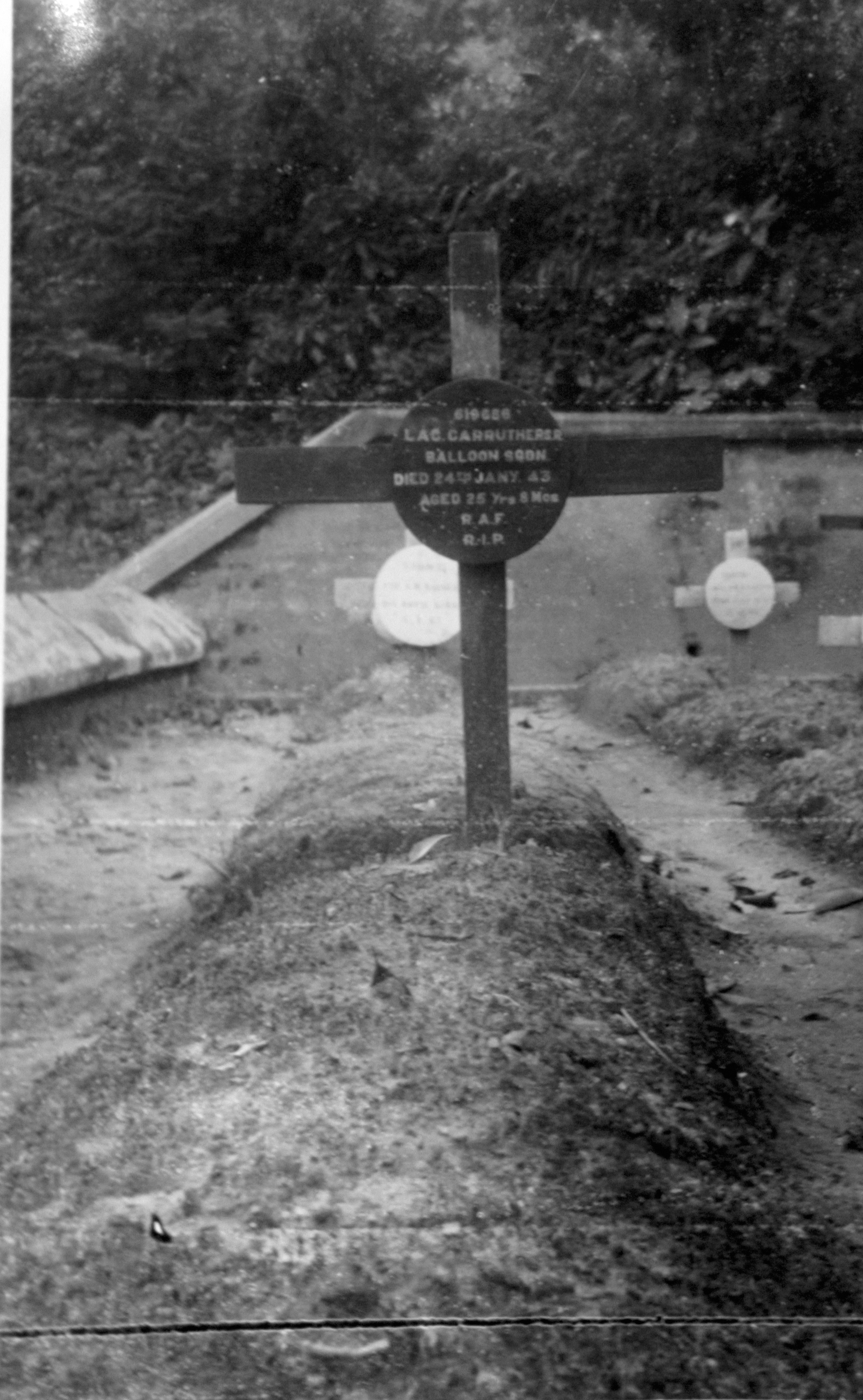
This is the grave of LAC Carruthers 978 Squadron who was killed during an air raid in Calcutta in January 1943.
Two other airmen were injured in the raid:
1251025 Leading Aircraftman Tapp, C., who had a bullet wound in his chest, and and was hospitalised as seriously injured.
He recovered.
1278061 Aircraftman 1st Class Grosvenor, J., who had a shrapnel wound in his back, and and was hospitalised as seriously injured.
He recovered.
3.
920857 Aircraftman 2nd Class
REPTON, GEORGE, Date of Death: 05/12/1943, Age: 40, Regiment/Service:
Royal Air Force Volunteer Reserve
978 Balloon Squadron, Grave
Reference: Plot L. Grave 106.
Cemetery: CALCUTTA
(BHOWANIPORE) CEMETERY, KOLKATA
Additional Information: Son of
Arthur and Alice Repton; husband of Josephine Lilian Repton, of Blackwater,
Camberley,
At 1147 hours bombing started, and continued at 1225 hours. 22 bombers hit the area flying at 15,000 feet flying East to West followed by 8
bombers at the same height. Four anti-personnel bombs and one 500lb bomb landed in the unit area. 920857 A.C. Repton, balloon operator,
was
killed outright. His funeral took place at the British Medical Hospital Cemetery
at 09.00 hours.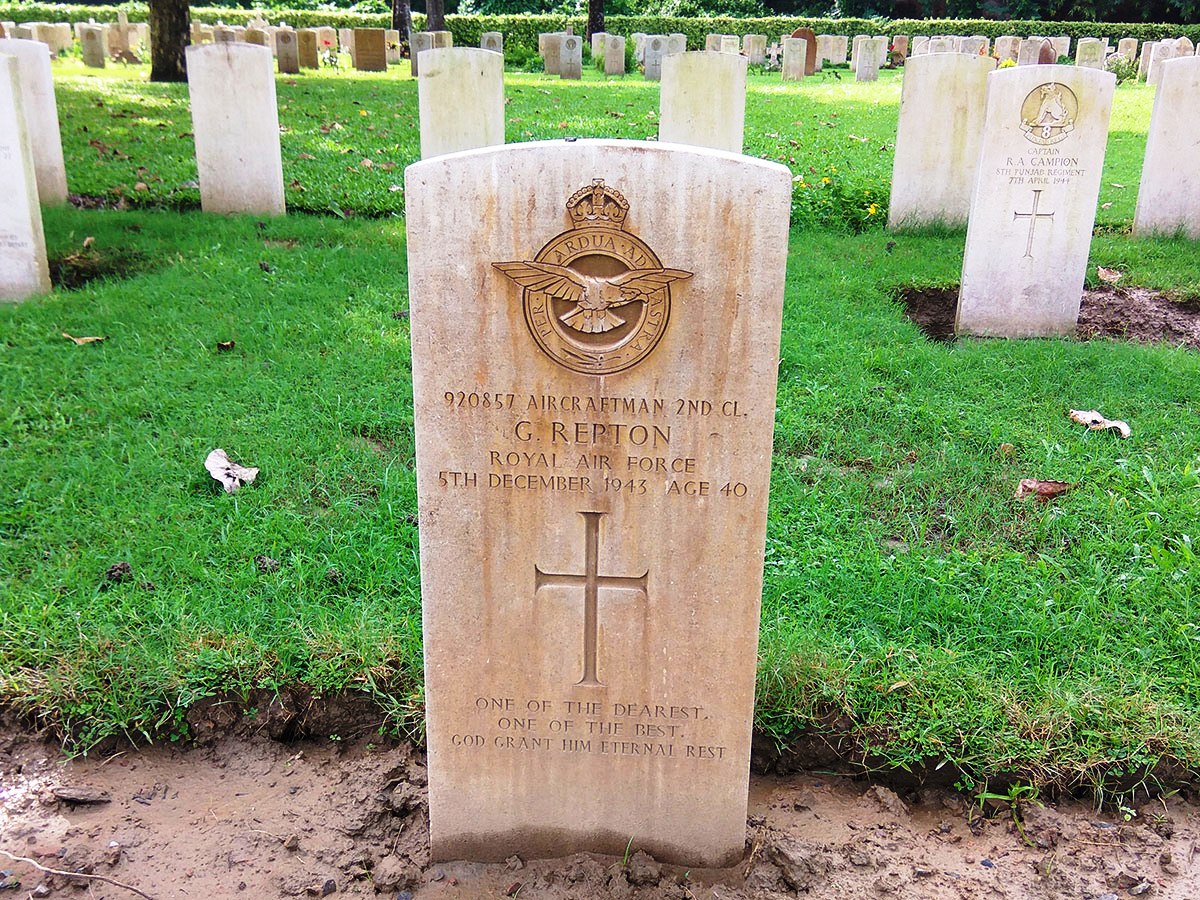
I am indebited to Subhadip Mukherjee, www.subhadip.in, Blog: www.indianvagabond.com who has supplied me with this picture.
4.
1529654
Aircraftman 2nd Class STRAUGHAN, LESLIE,
Date of Death: 07 DEC 1943, Age: 30, Regiment/Service: Royal Air Force
Volunteer Reserve
978
Balloon Squadron, Grave Reference: Plot L. Grave 107.
Cemetery:
CALCUTTA
(BHOWANIPORE) CEMETERY, KOLKATA
Additional
Information:
Son
of John Thomas Straughan and Mary Nicholson Straughan, of Ashington,
Northumberland; husband of Rosina Mons Straughan, of Ashington.
He was dangerously injured in the raid and hospitalised. Much damage was done to the equipment and buildings in the unit area.
1529654 A.C Straughan succumbed to his wounds at 0200 hours on 07 DEC 1943 and his funeral took place at the British Medical Hospital Cemetery at 1800 hours.
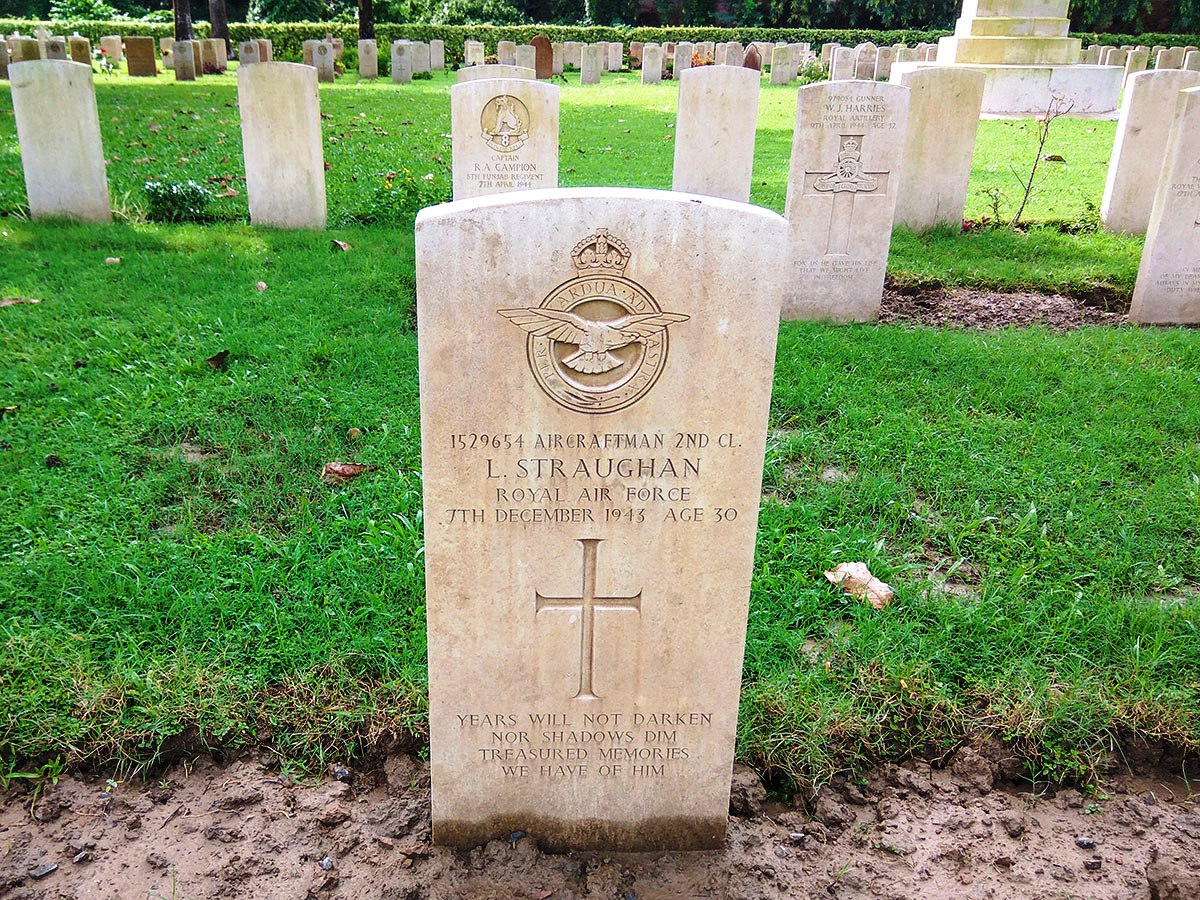
I am indebited to Subhadip Mukherjee, www.subhadip.in, Blog: www.indianvagabond.com who has supplied me with this picture.
5.
2087 Pilot Officer MUSHTAQ, AHMAD KHAN, Date
of Death: 13 JAN 1944, Age 28, Royal Indian Air Force, 978 Balloon Squadron.
Panel
Reference: Memorial:
DELHI
/ KARACHI 1939-1945 WAR MEMORIALS
Additional
Information: Son of Abdul Sattar Khan, of
He had left 978 Squadron and had gone on leave and had been given permission to sleep at his old Flight Headquarters while
on leave at Calcutta. He was found at 2215 hours on 12 JAN 1944, shot through the head.
He
died in the early hours of 13 JAN 1944 at Bengal General Hospital. He was buried on the morning of 14 JAN 1944 at
Mohamed
6.
14101
Leading Aircraftman BROKEFIELD,
LALOO
978
(R.A.F.) Balloon Squadron.
Panel
Reference:
Memorial:
DELHI
/ KARACHI 1939-1945 WAR MEMORIALS
Additional
Information:
Son
of Lathwellslong and Jiengress Laloo, of
On 29 MAR 1945, 978 Squadron was disbanded and this aircraftman died some 20 days later. His cause of death is not found in the Squadron
archive
which ends on 29 MAR 1945.
Below is a 1940 but informative press cutting of the war found in Beresford's papers! This relates to Dunkirk.
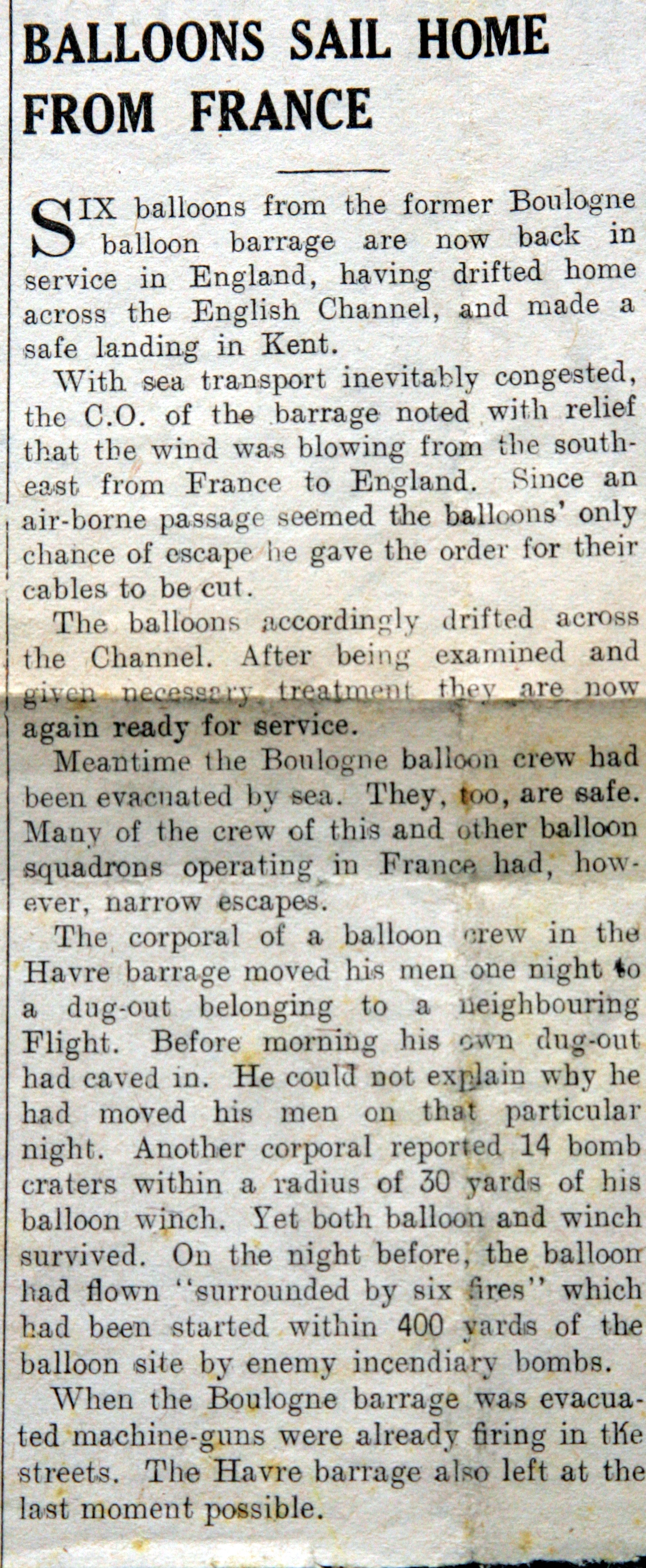
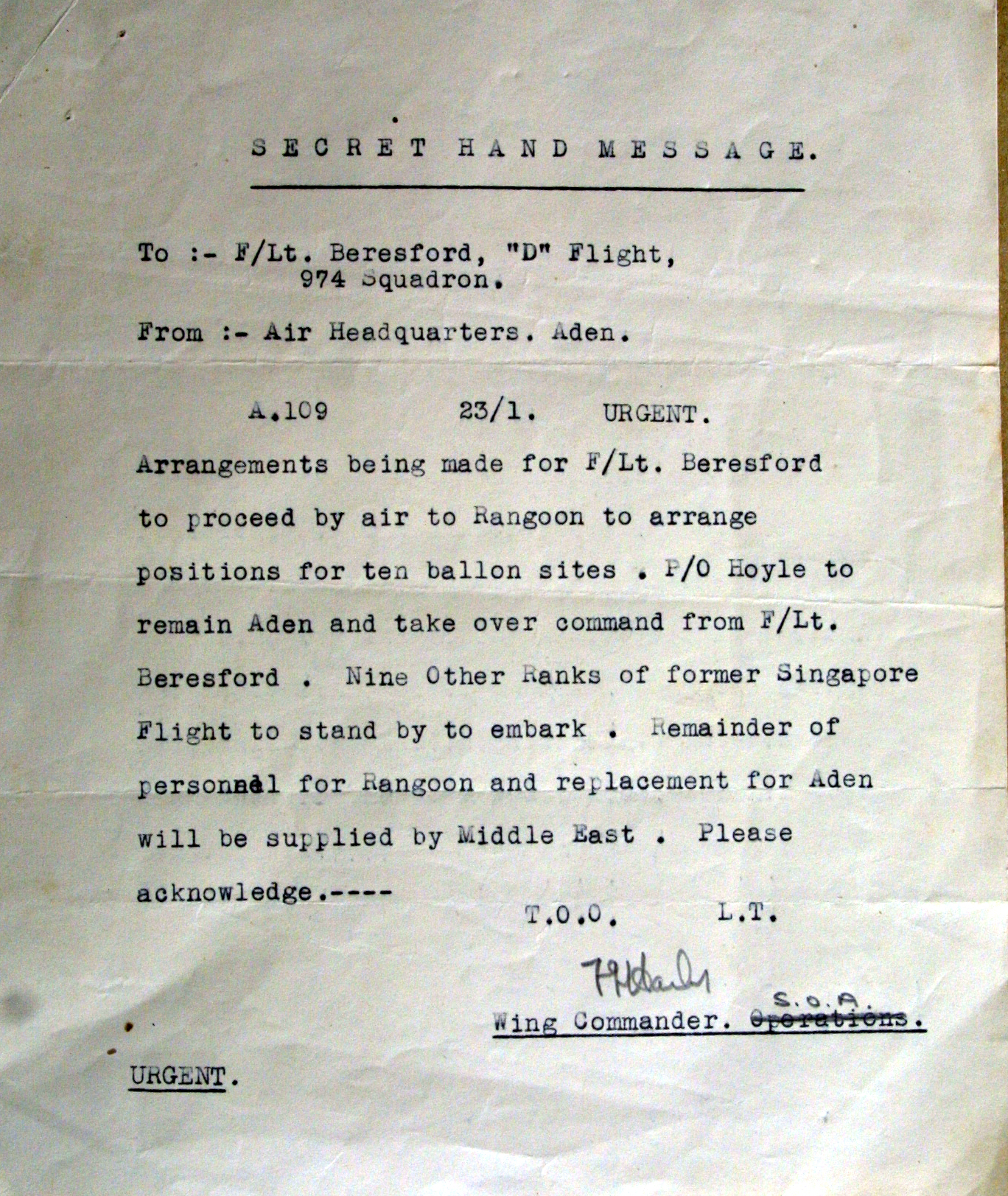
Beresford appears to have been at Southampton on 16th May 1940.I have a pass for Southampton Docks issued by the Assistant Provost Marshall giving him access to the docks and signed by A. W. N. Addison Wing Commander of the Balloon Barrage Southampton. Beresford was at Cardington on the 16th May 1941. Next posting shows he was sent to the British Forces Middle East on 10th December 1941.By the 27th December 1941 he is a Flight Lieutenant and is working the Balloon Shuttle Service with the Sea Transport Office in Aden. On the 23rd January 1941 he gets a letter telling him to proceed at once to Rangoon by air and 974 Sqdn was to be taken over by P. O. Hoyle.
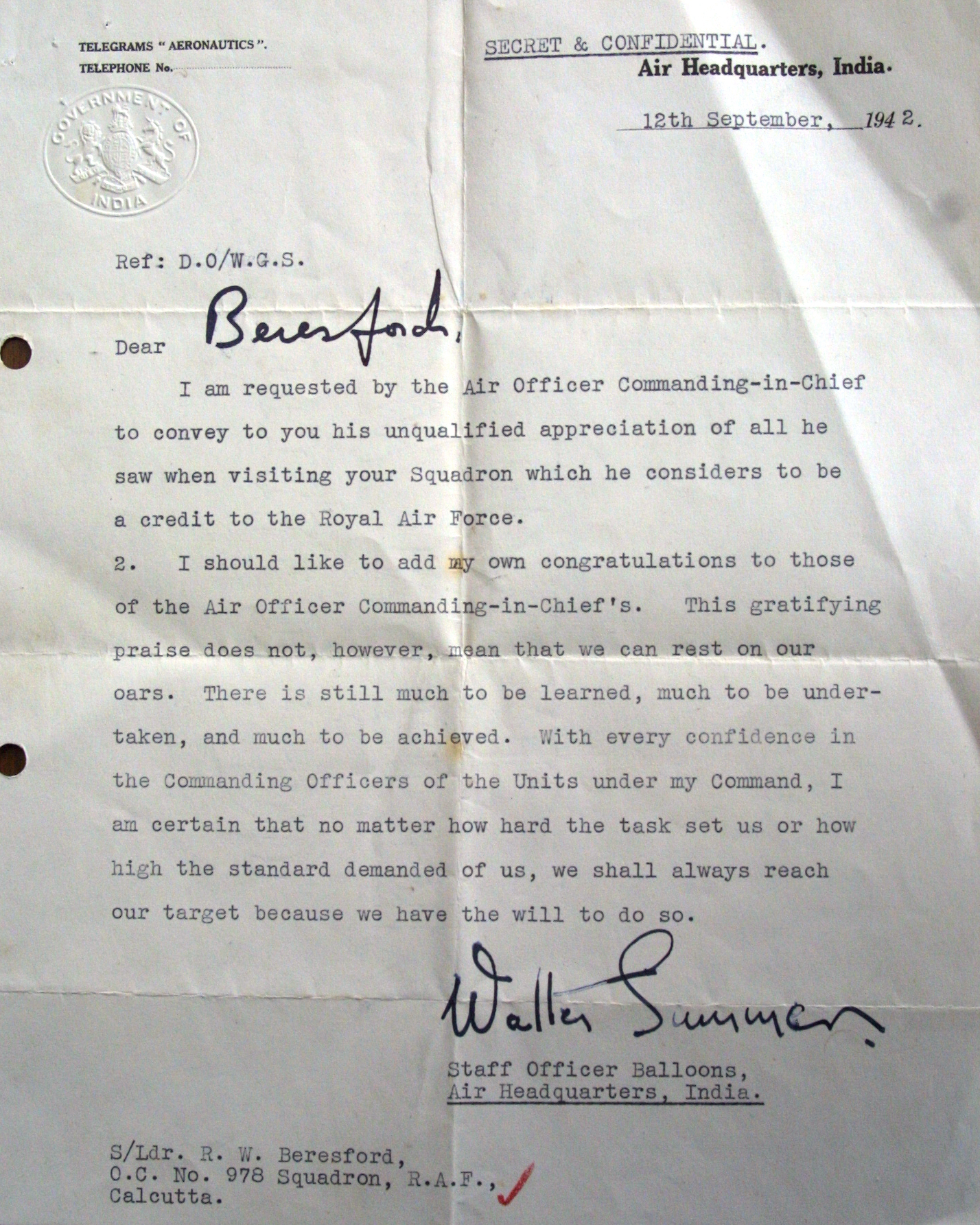
By the 15th February 1942 he is in Burma. His pass for Burma shows he had access to all RAF stations, Special danger areas and Special Prohibited areas around the Rangoon Harbour. By September 1942 he is in Calcutta as shown by this letter from Staff Officer Balloons Walter Summers, Air Headquarters India.
He left the service on 24 April 1948 and was enrolled in the Royal Air Force Supplementary List of Officers, this meant that in the event of an emergency being declared he was on reserve to serve when called up.
Click here for various pictures of Squadron Leader Beresford and his Crew